Transcranial Magnetic Stimulation
The non-invasive treatment ExoTMS®, scientifically validated for depression, anxiety and OCD (obsessive-compulsive disorder). Delivered on an outpatient basis, without medication and without anaesthesia.
Treatment depends on eligibility and a medical prescription, following the TMS Assessment Consultation.
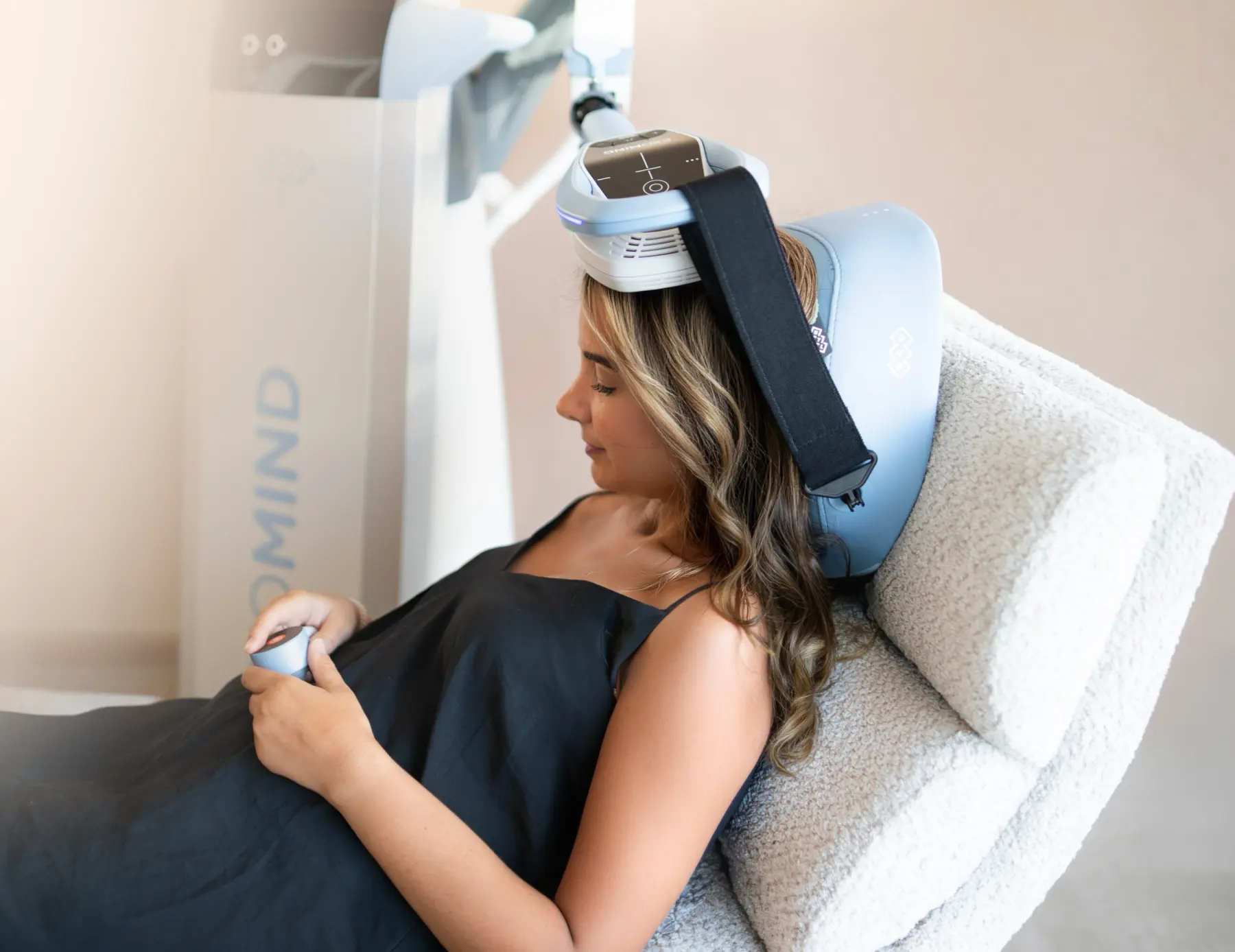
Non-invasive brain stimulation, on medical prescription.
TMS uses a magnetic field, produced by a coil placed next to the head, to stimulate areas of the brain involved in mood.
It has been used for over twenty years in hospitals and reference centres. It is validated by several clinical studies, particularly in depression that has not responded to antidepressants.
At AlmaraClinic, treatment is delivered with ExoTMS® equipment, which is CE marked, following the TMS Assessment Consultation.
- Non-invasive
- No medication
- No anaesthesia
- Immediate return to your routine
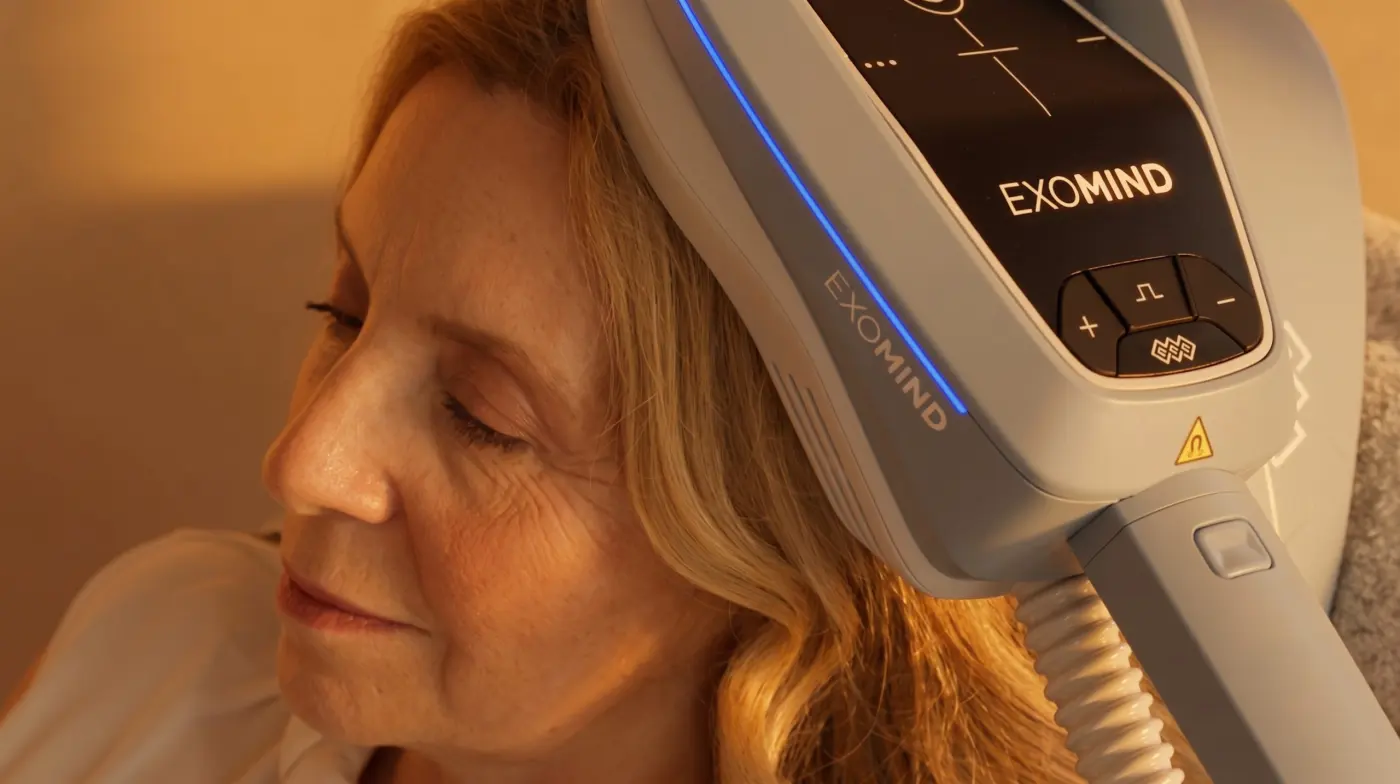
Indications and contraindications.
Eligibility is assessed by the clinical director at the TMS Assessment Consultation. It includes a review of previous tests and clinical history, screening for contraindications and, where there is any doubt, ordering tests before the treatment is prescribed.
Indications
- Depression, including medication-resistant depression.
- Depression with medication side effects that are hard to tolerate.
- OCD, when other treatments are not enough.
- Anxiety associated with depression or OCD.
- Binge eating, as an option assessed in consultation.
Contraindications to assess
- metal implants in the head or neck (except dental), such as aneurysm clips or metal fragments;
- cochlear implants;
- brain or vagus nerve stimulators;
- implanted pacemaker or defibrillator (to be assessed);
- history of epilepsy or seizures;
- pregnancy (to be assessed by the doctor);
- other conditions, assessed in consultation.
Before the consultation, a safety screening is carried out. The clinical director confirms each point at the TMS Assessment Consultation.
TMS for each clinical condition.
Clinical study results, protocol and pathway for each indication.

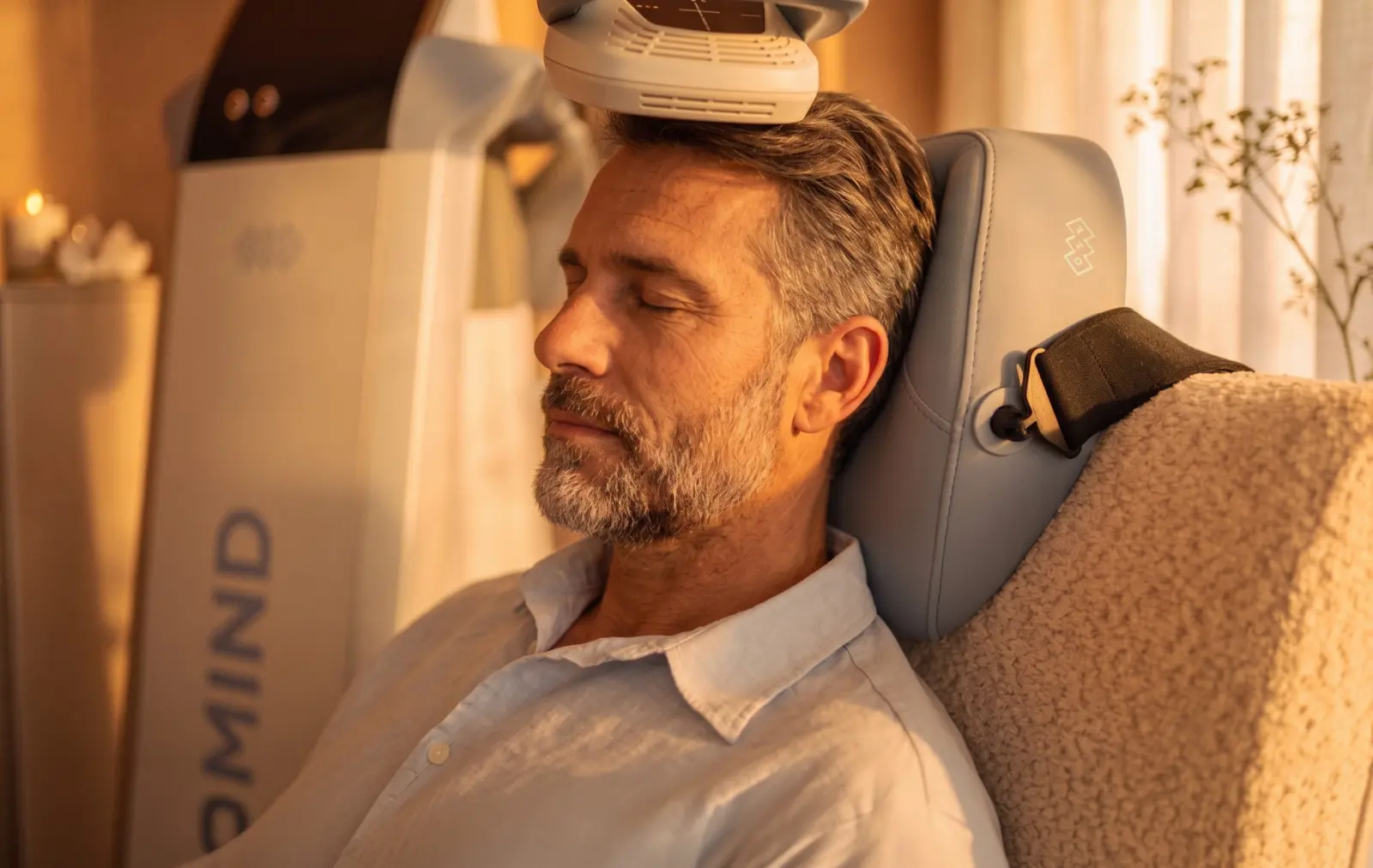
A session, step by step.
From arrival to returning to your routine, with no anaesthesia or sedation.

Arrival
You sit in a comfortable reclining chair. You may bring someone with you.
Calibration in the first session
The nurse determines the right intensity for you. This is why the first session takes longer.
Coil positioning
During the session, you hear clicks and feel light tapping on the scalp. Most people adapt to this sensation quickly.
The session lasts between 18.5 and 24.5 minutes
According to the protocol prescribed by the doctor. The nurse is present throughout the session.
Back to your routine
After the session, you can drive and work.
How many sessions, and over what period.
Sessions per cycle
6 to 30
As prescribed by the doctor, after the TMS Assessment Consultation.
Length of each session
18.5 to 24.5 min
According to the protocol indicated for you.
Times per week
2 to 5
According to the protocol, with medical reassessment throughout the cycle.
Response varies from person to person: it may appear in the first few weeks or closer to the end of the cycle.
Completing the prescribed cycle is part of the treatment.
A treatment validated by clinical studies.
TMS for depression has been studied in several clinical trials. Response means a clear improvement in symptoms; remission means the absence of significant symptoms.
75%
response rate
Clear improvement in depression symptoms (HAMD-17) in patients treated with TMS.
44%
remission rate
Absence of significant symptoms at the end of treatment.
Noda Y. et al. Impact of Comorbid Generalized Anxiety Disorder on rTMS/iTBS Clinical Outcomes in Major Depression. Journal of Personalized Medicine, 2026 (registry study of 108 patients; results of the 72 with depression without an anxiety disorder).
58%
response rate
In 307 patients with depression that had not responded to antidepressants, across 42 centres.
37%
remission rate
In real clinical practice, outside a controlled trial.
Carpenter L. L. et al. Transcranial magnetic stimulation (TMS) for major depression: a multisite, naturalistic, observational study of acute treatment outcomes in clinical practice. Depression and Anxiety, 2012.
Studies use different transcranial magnetic stimulation devices and protocols. Results vary from person to person and are assessed by the doctor throughout treatment.
More information on the AlmaraClinic BlogAge, medication, side effects and what comes next.
Age
Indicated for adults aged 18 and over.
Medication and psychotherapy
TMS is carried out without stopping your usual medication. Any change should be decided together with your doctor.
TMS can be combined with psychotherapy, as part of multidisciplinary clinical care.
Side effects
The most common are mild headache and scalp discomfort, especially in the first sessions, and mild tiredness. They are usually temporary.
After the cycle
At the end of the cycle, the doctor reviews your progress and sets the next steps: spaced maintenance sessions, continued psychotherapy or medication adjustment.
Our team

Dr. Bruno Gomes
Clinical director, specialist in Internal Medicine. Carries out the TMS Assessment Consultation, assesses eligibility and gives the initial treatment indication.
Licence no. OM 60263

Nurse Joana Managem
Nurse trained in ExoTMS®. Attends every session and records how well the treatment is tolerated.
Licence no. OE 114409
From first contact to the end of the cycle.
NeuroCheck
Free information session, with no obligation, with our Patient Care, Vanessa Kachinski. You learn about the treatment, the fees and the payment terms.
TMS Assessment Consultation
The clinical director, Dr Bruno Gomes, assesses whether your clinical case is eligible for TMS. This includes reviewing previous tests and your medical history, checking contraindications and, if there are any doubts, ordering tests before prescribing treatment.
Personalised plan
With the medical prescription, the number of sessions, between 6 and 30, and their frequency are set.
Sessions and follow-up
You are followed by our clinical team, session after session. Each session lasts between 18.5 and 24.5 minutes. At the end of the cycle, the doctor sets the next steps.
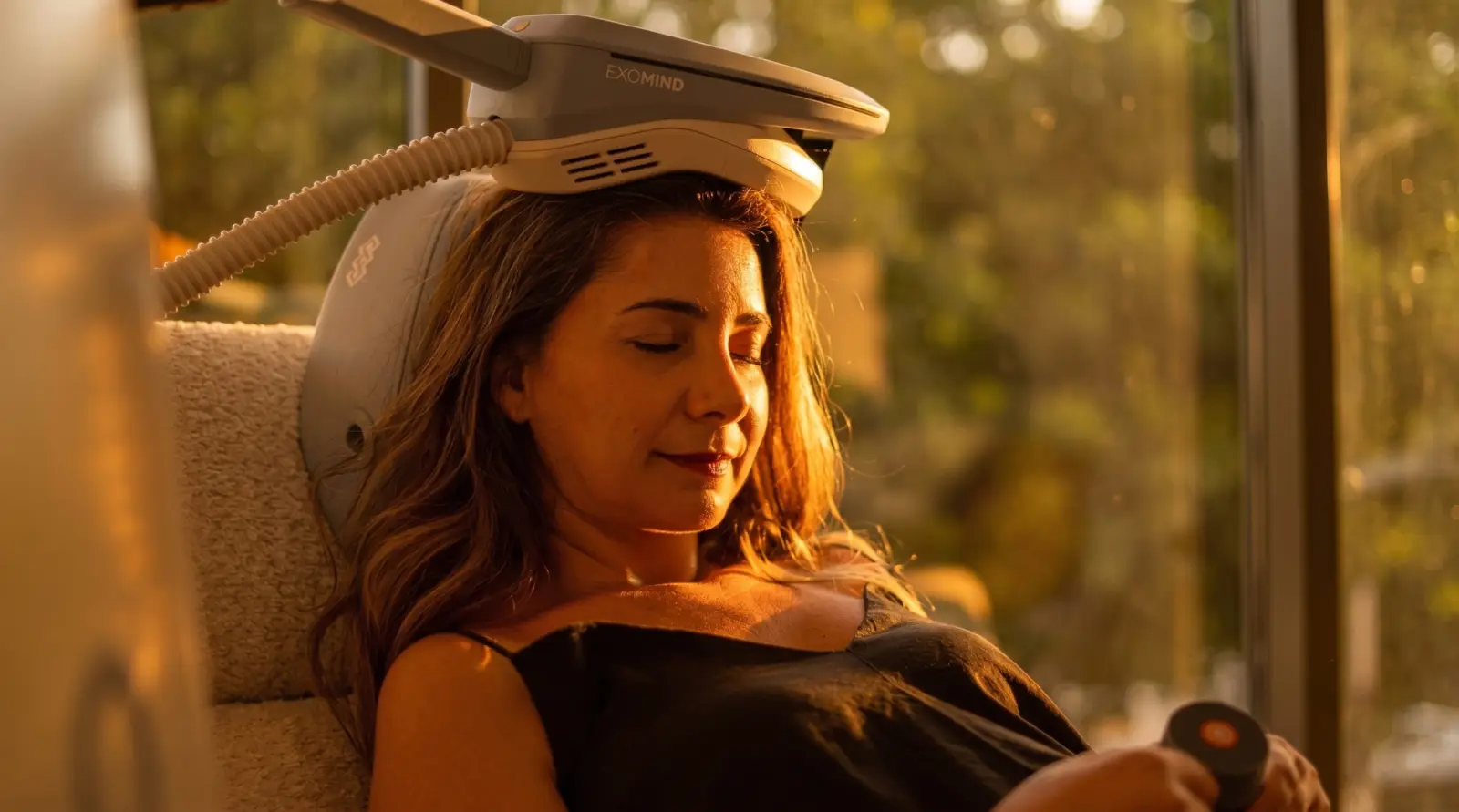
Does it hurt?
As a rule, no. You feel light tapping on the scalp and hear clicks. In the first sessions, a mild headache may occur, usually temporary.
Can I drive afterwards?
Yes. There is no anaesthesia or sedation. You can drive and work straight afterwards.
Do I have to stop my medication?
No. TMS is carried out without stopping your usual medication. Any change should be decided together with your doctor.
When will I start to notice a difference?
It varies from person to person. Response may appear in the first few weeks or closer to the end of the cycle.
What if it does not work?
The doctor reassesses midway through and at the end of the cycle. If the response is not as expected, they will discuss other treatment options with you.
Is it confidential?
Yes. Clinical information is shared only with your authorisation.
Can I have sessions on Saturdays?
No. Sessions take place Monday to Friday, between 9am and 6pm, at a time to be arranged.
I have had TMS at another clinic. Can I have maintenance here?
Yes, after the TMS Assessment Consultation. Bring the report from your previous treatment.
Fees and terms
In the order of the pathway. The number of sessions is set in the medical prescription, so treatment fees are per session.
NeuroCheck
Free of charge
- Information session with Patient Care
- Included
- Treatment options explained
- Included
- Fees and instalment payments
- Included
- Booking of the TMS Assessment Consultation
- Included
TMS Assessment Consultation
100 €
With the clinical director, Dr Bruno Gomes. Assesses eligibility for TMS and, if indicated, prescribes the treatment and sets the plan.
- Number of sessions, if indicated
- 6 to 30
- Length of each session
- 18.5 to 24.5 min
Standard protocol
24.5 minute sessions
As part of a treatment protocol, from€200 per session
- Single session
- 350 €
Intensive protocol
18.5 minute sessions
As part of a treatment protocol, from€100 per session
- Single session
- 200 €
The fee per session within a protocol is set in the plan, after the TMS Assessment Consultation.
Instalment payments
You can pay for treatment in up to 12 interest-free instalments with Cofidis Pay. The terms are explained in the NeuroCheck.
Instalments at 0% interest and charges are paid by the customer's debit or credit card through a payment solution based on a factoring agreement between Cofidis and the merchant. Find out more from Cofidis, registered with the Banco de Portugal under no. 921.
Payment methodsInsurance
Reimbursement depends on your insurer and your policy. Check with your insurer before the consultation; if needed, we can help with the paperwork.
We are in the process of joining agreements with insurers, to make access to our care even simpler. More news soon.
Fees and insurance